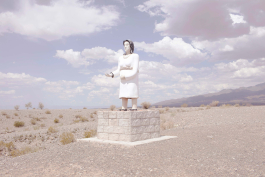
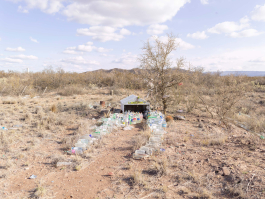
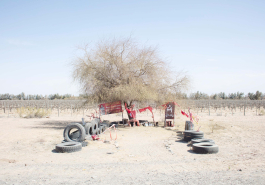
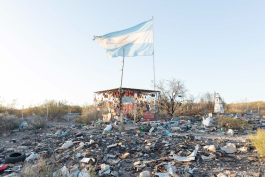
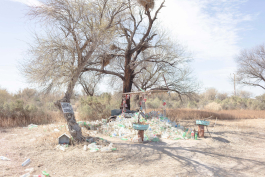
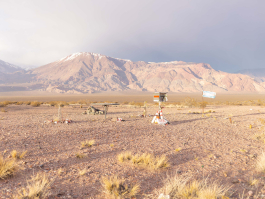
One of my earliest memories takes me back to the summers of my childhood, when my parents would drive me to the beaches south of Mar del Plata. I remember once, from the back seat of the car, seeing a mound of plastic bottles by the side of the road. At first glance it looked like rubbish, but there was a strange order in that pile, as if someone had taken care to arrange them. Many years later I learned that it was a roadside shrine dedicated to the Difunta Correa. Perhaps this story began there.
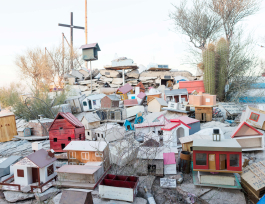
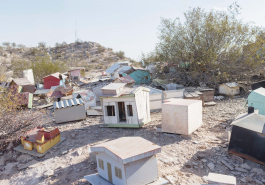
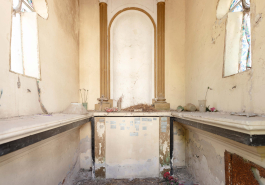
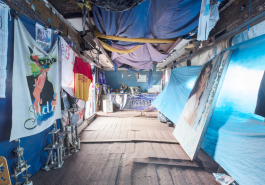
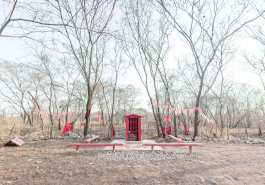
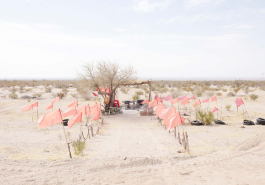
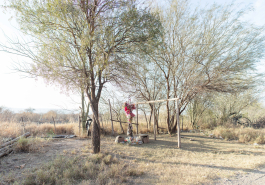
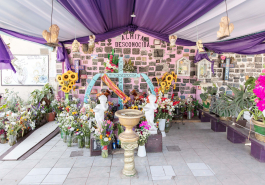
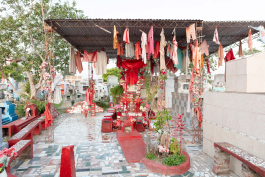
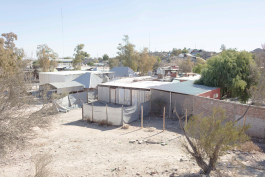
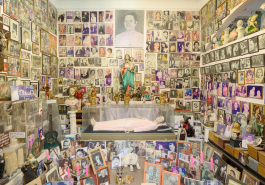
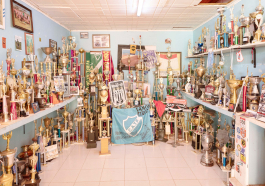
Over the years —and across more than a decade of travels— I journeyed through my country, Argentina, in search of the traces of popular devotion: altars lost in the solitude of back roads, graves turned into shrines, offerings in the middle of the bush or along the riverbank. I came to understand that in every region, faith adapts to its landscape, its history, its wounds. Where institutions grow distant, people find other ways to believe: they choose their own saints, invent their own rituals, blend what they have learned with what they have inherited.
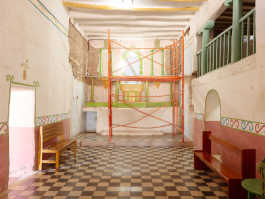
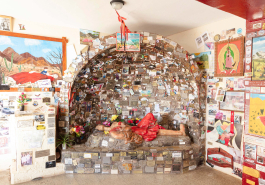
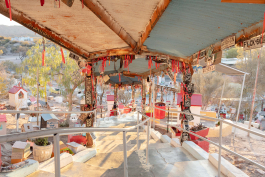
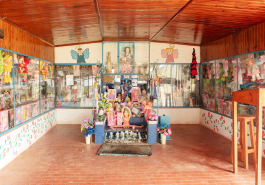
In these remote corners of the country I discovered another form of faith: mestizo, popular, born from the crossing of indigenous, gaucho, African and Christian traditions. At every altar I saw the cross and the payé coexisting, the Virgin and the skeleton, the memorised prayer and the rite passed down by word of mouth. There is no conflict, only convergence. Because in these places no one asks whether something is correct, only whether it works.
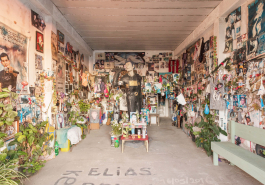
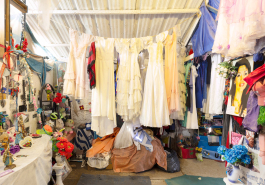
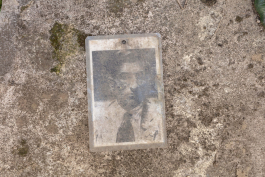
It usually begins with a death that hurts and a minimal gesture: a candle, a cross, a prayer. Then comes the rumour: they say he helps, that she listens, that they answer. If others receive too, faith catches on. I came to see that these cults are not merely devotion: they are a mirror of those who sustain them. The people do not make saints of the rich and powerful, but of those who carried the same sorrows. What is venerated is not good manners or obedience, but suffering, defiance and dignity. It is a response to forgetting, an affirmation that their story too deserves to be sacred.
Many of these cults emerge where pain went unanswered: injustices left unrepaired, grief without farewell. There, faith becomes both consolation and demand. The cry for justice rises to the divine plane, because down below no one listens. This is not a faith that evades; it is a memory that resists and preserves what the official account would rather silence.
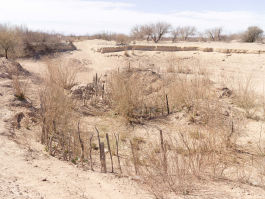
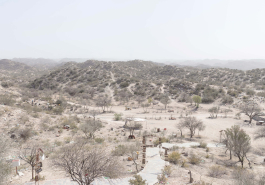
I reach the end knowing that the landscape holds traces not always visible to the naked eye. Every step was a clue, a scattered sign that led me to understand that these cults do not only live in people —they are also written into the land. On the margins of my country, faith does not descend from above. It rises from below.
Uno de mis recuerdos más antiguos me transporta a los veranos de la infancia, cuando mis padres me llevaban a las playas del sur de Mar del Plata. Recuerdo que una vez, desde el asiento trasero del coche, vi al costado de la ruta una montaña de botellas de plástico. A primera vista parecía basura, pero había en aquel amontonamiento un orden extraño, como si alguien hubiera querido acomodarlas con cuidado. Muchos años después supe que aquello era un altar rutero dedicado a la Difunta Correa. Quizá esta historia empezó ahí.
Con los años —y a lo largo de más de una década de viajes— recorrí mi país, Argentina, buscando los rastros de las devociones populares: altares perdidos en la soledad de los caminos, tumbas convertidas en templos, ofrendas en medio del monte o al borde del río. Empecé a entender que en cada región, la fe se acomoda a su paisaje, a su historia, a sus heridas. Allí donde las instituciones se vuelven lejanas, la gente encuentra otras formas de creer: elige a sus propios santos, inventa sus rituales, mezcla lo aprendido con lo heredado.
En estos rincones apartados del país descubrí otra forma de fe: mestiza, popular, nacida del cruce entre lo indígena, lo gaucho, lo africano y lo cristiano. En cada altar vi convivir la cruz y el payé, la virgen y el esqueleto, la oración aprendida y el rito transmitido al oído. No hay conflicto, hay cruce. Porque en estos lugares nadie pregunta si algo es correcto, solo si funciona.
Todo suele empezar con una muerte que duele y un gesto mínimo: una vela, una cruz, una plegaria. Luego viene el rumor: dicen que ayuda, que escucha, que cumple. Si otros también reciben, la fe prende. Descubrí que estos cultos no son solo devoción: son un espejo de quienes los sostienen. El pueblo no hace santos a los ricos y poderosos, sino a los que cargaron con sus mismas penas. No se veneran los buenos modales ni la obediencia, sino el sufrimiento, la rebeldía y la dignidad. Es una respuesta al olvido, una afirmación de que su historia también merece ser sagrada.
Muchos de estos cultos surgen donde el dolor no tuvo respuesta: injusticias sin reparación, duelos sin despedida. Ahí, la fe se vuelve consuelo y reclamo. La demanda de justicia sube al plano divino, porque abajo nadie escucha. No es una fe que evade, es una memoria que resiste y guarda lo que el relato oficial prefiere callar.
Llego al final sabiendo que el paisaje guarda huellas que no siempre se ven a simple vista. Cada paso fue una pista, una señal dispersa que me llevó a entender que estos cultos no solo viven en la gente, también están escritos en la tierra. En los márgenes de mi país, la fe no baja desde arriba. Brota desde abajo.